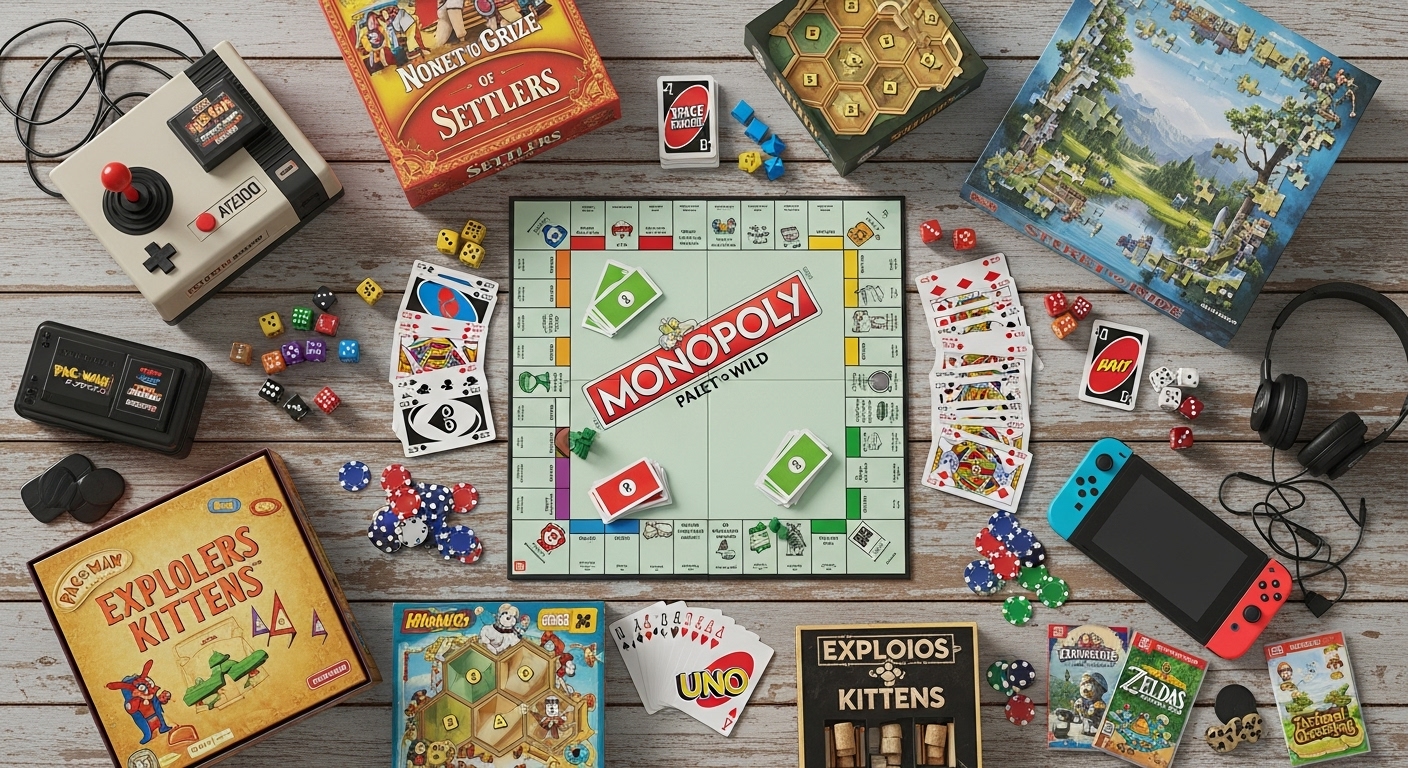

In an industry as vast and competitive as video gaming, it’s no surprise that developers are constantly searching for new ways to set their titles apart from the crowd. While many games follow similar patterns—shooters, platformers, open-world adventures—there exists a class of games that defy these norms and venture into uncharted territory. These games embrace originality, offer refreshing mechanics, and provide experiences that stay with players long after they’ve put down the controller. In this blog post, we will explore games that stand out for their unique concepts, showcasing the creativity and boldness that define them.
The Rise of Innovation in Gaming
The gaming industry has always thrived on innovation. Early games like Pong and Space Invaders introduced simple, yet addictive mechanics that captivated audiences. Over time, as technology advanced, so did the complexity and scope of games. Yet, amidst all the technological advancements and hyper-realistic graphics, the core of what makes a game enjoyable has always been its ability to surprise, engage, and provide a unique experience.
The demand for unique games has never been greater. While big-budget AAA titles often focus on refining proven formulas, indie developers have become the pioneers of originality. With smaller budgets but boundless creativity, these developers are experimenting with new gameplay mechanics, telling unconventional stories, and offering artistic styles that break away from the mainstream.
These games aren’t just about providing a fun distraction—they are about making players feel something, whether it’s awe, confusion, or even introspection. In an industry dominated by sequels and franchises, these unique games remind us why we fell in love with video games in the first place: the sense of wonder and discovery.
Journey: A Silent Masterpiece
One of the most iconic examples of a unique video game is Journey (2012), developed by Thatgamecompany. Journey is often hailed as a work of art, not just a game. The premise is simple: you play as a robed figure traveling through a vast desert landscape toward a distant mountain. But the experience of Journey is anything but simple.
What makes Journey so unique is its ability to convey emotion and narrative without uttering a single word. The game features no dialogue, no text, and no traditional storytelling techniques. Instead, it uses music, visuals, and environmental cues to tell a compelling story of solitude, companionship, and the pursuit of a higher goal. Players encounter other anonymous players during their journey, and together, they can help each other reach the mountain, all while remaining completely silent, communicating only through simple gestures.
The beauty of Journey lies in its simplicity and emotional resonance. The game’s world feels vast and lonely, and the absence of a traditional narrative allows players to project their own interpretations and feelings onto the experience. Journey is proof that a game doesn’t need complex dialogue or action-packed sequences to be memorable—it only needs a strong emotional core and the freedom for players to explore and connect with others in meaningful ways.
Papers, Please: The Burden of Bureaucracy
While Journey focuses on the beauty of silent exploration, Papers, Please (2013) tackles a completely different and equally unique concept. Created by Lucas Pope, Papers, Please puts you in the role of a border checkpoint inspector in a fictional, totalitarian country called Arstotzka. Your job is to inspect documents and decide whether to allow or deny entry to people attempting to cross the border.
The uniqueness of Papers, Please lies in its combination of mundane tasks with complex moral dilemmas. You’re not just checking passports—you’re making decisions that can affect people’s lives. As the game progresses, the stakes grow higher, and you must navigate a complex web of moral choices, political pressure, and personal stories that force you to question your own ethics. Should you help the desperate mother trying to reunite with her child, even if it means breaking the rules? Or should you obey the government’s orders, even if it means sending innocent people to their deaths?
What sets Papers, Please apart is how it blends repetitive gameplay with deep moral conflict. The game’s central mechanic—checking documents and processing people—sounds simple, but the weight of the decisions you make adds layers of complexity. It forces you to confront the consequences of your actions, making it one of the most thought-provoking and unique games ever created.
The Stanley Parable: A Game About Games
If you’ve ever questioned the concept of choice in video games, The Stanley Parable (2013) is the game that will make you rethink everything. Developed by Davey Wreden and William Pugh, The Stanley Parable is a narrative-driven game that explores the illusion of choice in video games. You play as Stanley, an office worker whose world is suddenly turned upside down when he finds himself in an empty building. The game’s narrator leads you through various scenarios, but the twist is that you can choose to ignore the narrator and take different paths.
At first, it seems like any other narrative game where you make decisions that affect the outcome. But as you progress, you realize that The Stanley Parable isn’t about choice at all. It’s about the lack of choice. The narrator constantly comments on your actions, often sarcastically or humorously, highlighting how limited your choices really are in a game. The game presents you with multiple endings, but no matter what you do, the choices you make always seem to lead back to the same existential question: Do you really have free will in video games?
What makes The Stanley Parable unique is how it deconstructs the very concept of gaming. It’s a commentary on the limitations of game design, the role of the player, and the illusion of choice that most video games present. By breaking the fourth wall and acknowledging the game as a game, The Stanley Parable forces players to question the nature of interactive storytelling and challenges the boundaries of what a game can be.
Katamari Damacy: The Joy of Absurdity
Katamari Damacy (2004) is a game that defies logic and embraces sheer absurdity. Developed by Namco, Katamari Damacy has one of the most bizarre premises in gaming history: you control a small character called the Prince, who must roll a sticky ball, or “Katamari,” through a world filled with objects. The goal is to collect as many items as possible, from paperclips to cars, and eventually, entire buildings and landscapes.
The game’s mechanics are simple: the more items you roll up, the bigger your Katamari becomes, allowing you to pick up even larger objects. But the fun of Katamari Damacy isn’t just in the act of rolling things up—it’s in the absurdity of the entire concept. The game’s whimsical art style, quirky music, and offbeat humor make it one of the most memorable and unique experiences in gaming.
What makes Katamari Damacy stand out is its joyful absurdity. There’s no deep story or complex objectives—just the simple pleasure of rolling things up and watching your Katamari grow bigger and bigger. It’s a game that doesn’t take itself seriously, and that’s precisely what makes it so much fun. In a world where many games strive for realism and gravity, Katamari Damacy embraces the joy of the surreal.
The Future of Unique Games
As technology continues to advance, the potential for unique and innovative games only grows. Virtual reality (VR), augmented reality (AR), and artificial intelligence (AI) are opening up new possibilities for game design, allowing developers to create even more immersive and unconventional experiences. The future of gaming lies in the hands of those willing to experiment and challenge the status quo.
We can expect to see more games that blur the lines between different genres, push the boundaries of narrative storytelling, and offer players new ways to interact with the game world. Whether it’s through the use of AI-driven characters, procedurally generated environments, or new forms of player expression, the future of gaming is sure to be filled with even more unique and innovative titles.
Conclusion
The beauty of unique games lies in their ability to surprise, challenge, and engage players in new and unexpected ways. Whether it’s the silent beauty of Journey, the moral complexity of Papers, Please, the existential exploration of The Stanley Parable, or the absurd joy of Katamari Damacy, these games prove that video games are more than just entertainment—they are an art form. As the industry continues to evolve, we can only look forward to more games that push the boundaries of what’s possible and redefine what a video game can be.