
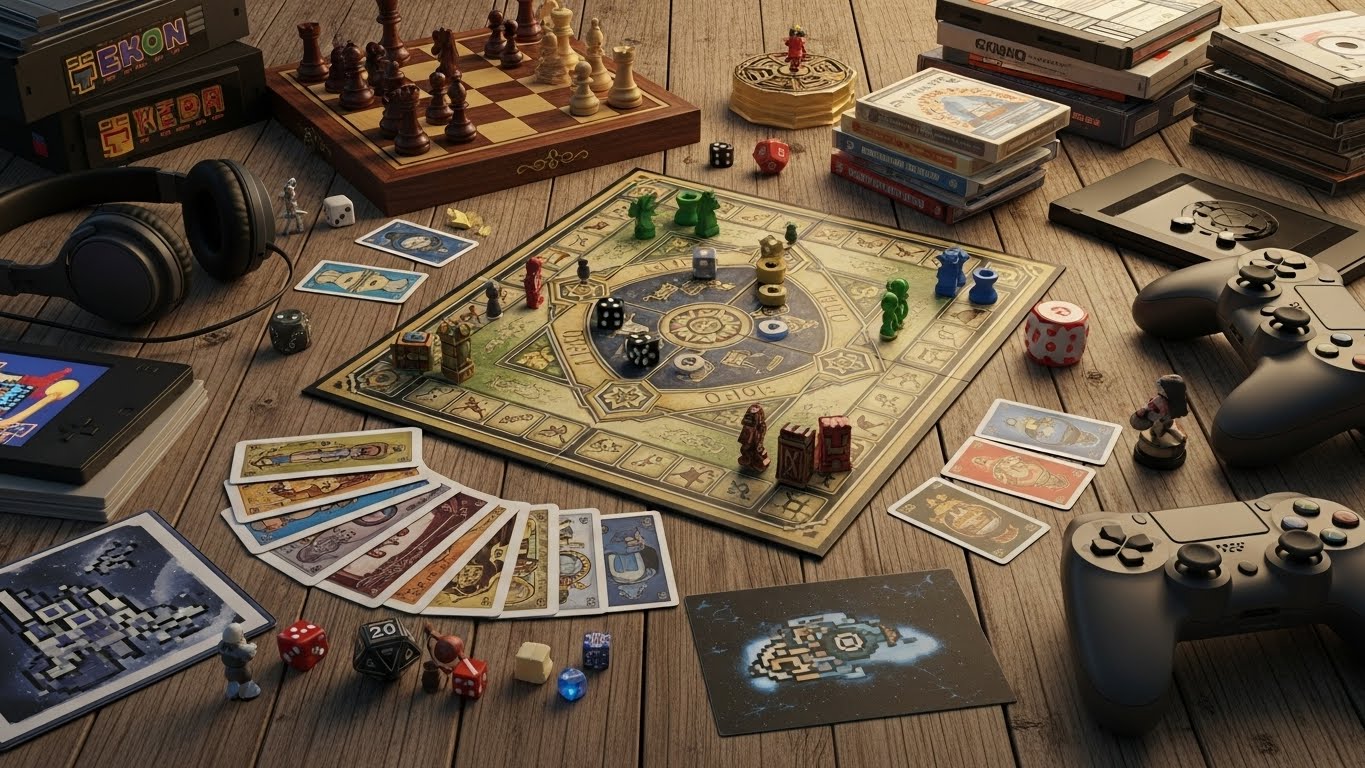
Introduction: The Everlasting Appeal of Games
Games have been an integral part of human civilization for thousands of years. From ancient board games and physical contests to modern digital experiences, games entertain, educate, and challenge us. They engage the mind, build social connections, and often serve as reflections of culture and human creativity. While many people consider games merely a form of leisure, they are much more than that. Games impact cognitive development, social interaction, emotional intelligence, and even professional skills. The evolving nature of games, driven by technology and innovation, has made them a staple of modern life. Exploring their history, benefits, and cultural significance reveals the profound influence games have on individuals and societies.
The History and Evolution of Games
Games have a rich history that stretches back to ancient civilizations. Archaeological evidence reveals that games such as Senet in Egypt and Go in China were played thousands of years ago, providing entertainment while reflecting social hierarchies and strategic thinking. In medieval Europe, games like chess emerged as tools of intellectual development and strategic training. With the industrial era came more structured board games, card games, and organized sports, making play accessible to wider populations. The 20th century introduced video games, completely revolutionizing how humans engage with games. Early video games like Pong and Pac-Man laid the foundation for an industry that would grow into a multi-billion-dollar global market. Today, games are not limited by physical boundaries. Digital platforms, online multiplayer experiences, and immersive technologies such as virtual and augmented reality have transformed games into interactive worlds that offer limitless possibilities.
Games as Tools for Cognitive Development
Games are powerful instruments for cognitive growth. Strategy-based board games and video games challenge players to think critically, plan ahead, and adapt to new scenarios. Puzzle-solving games improve logical reasoning and problem-solving skills, while fast-paced action games enhance hand-eye coordination and multitasking abilities. Games that require memorization, pattern recognition, or resource management stimulate mental agility and attention to detail. In educational contexts, games can make learning enjoyable and effective, allowing players to acquire skills without traditional methods of instruction. Cognitive benefits are not limited to children; adults also experience enhanced brain function, improved memory, and sharper decision-making skills through regular gameplay.
The Social Dimension of Gaming
Games have always fostered social interaction. Traditional games, such as card games, board games, and sports, encourage teamwork, communication, and collaboration. Modern gaming has expanded these social dimensions through online multiplayer experiences. Players from different countries can collaborate, compete, and form communities based on shared interests. Online platforms, competitive esports, and cooperative gameplay create opportunities for friendships, mentorship, and leadership development. Gaming communities serve as a social fabric where players exchange ideas, strategies, and personal experiences. For many, games are not just about competition or entertainment; they are a medium to build meaningful relationships and connect with others in ways that transcend geography and culture.
Emotional and Psychological Benefits of Games
Games provide significant emotional and psychological benefits. Playing games can be a source of stress relief, offering a safe escape from the pressures of daily life. Immersive storytelling and interactive gameplay evoke emotions, ranging from excitement and joy to empathy and introspection. Games that involve challenges and achievements foster a sense of accomplishment, boosting confidence and self-esteem. For some, gaming serves as a form of therapy, providing a structured environment for problem-solving and emotional exploration. Even casual gameplay can improve mood, enhance focus, and offer a sense of purpose. While moderation is essential, the emotional rewards of gaming are well-documented, making it a valuable tool for mental well-being.
The Cultural Significance of Games
Games are a reflection of the societies in which they exist. Traditional games often carry historical, cultural, and social significance. Chess, Go, and various card games have deep-rooted cultural importance and illustrate values such as strategy, patience, and competition. Modern digital games continue this tradition, exploring themes of identity, morality, conflict, and collaboration. Story-driven games provide players with narratives that mirror social issues, ethical dilemmas, and cultural values, making them not only entertainment but also a form of artistic expression. Gaming culture itself has become a global phenomenon, influencing fashion, music, language, and lifestyle. Through games, cultural ideas are shared, preserved, and transformed, highlighting the interplay between play and society.
Games as Career and Industry Opportunities
The growth of the gaming industry has created diverse career opportunities. Professional esports athletes, streamers, game designers, developers, sound engineers, and marketing professionals all contribute to the thriving gaming ecosystem. Esports tournaments now feature multi-million-dollar prize pools and global audiences, showcasing the industry’s economic impact. Independent game developers can reach international markets through digital distribution, creating innovative and culturally relevant content. The gaming industry is no longer confined to entertainment; it drives technological innovation, economic growth, and global collaboration. For those passionate about games, the sector offers opportunities to turn creativity into careers, combining technical skills, storytelling, and social engagement.
The Educational Potential of Games
Games are increasingly recognized as valuable educational tools. Gamification, the use of game design principles in non-gaming contexts, enhances motivation and engagement in learning environments. Educational games make subjects such as mathematics, science, and language more interactive and enjoyable, encouraging problem-solving and experimentation. Historical simulations and strategy games allow learners to experience complex concepts in a controlled environment, promoting critical thinking. Even mainstream games often incorporate lessons in resource management, teamwork, and strategic planning. By integrating play into education, games create immersive learning experiences that foster curiosity, creativity, and lifelong learning.
Technological Innovations Shaping Modern Gaming
Technology has redefined the gaming experience. Virtual reality and augmented reality offer immersive worlds where players can physically interact with digital environments. Artificial intelligence creates dynamic game scenarios that respond intelligently to player decisions, providing unique experiences for every individual. Cloud gaming eliminates the need for expensive hardware, making high-quality gaming accessible to more people worldwide. Social media and streaming platforms have transformed how players share content, communicate, and engage with gaming communities. Technological advancements continue to expand creative possibilities, ensuring that gaming remains at the forefront of digital innovation.
The Future of Games
The future of games is likely to be more immersive, interactive, and personalized than ever before. Artificial intelligence will enable smarter non-player characters, more adaptive challenges, and dynamic storylines. Virtual and augmented reality will merge digital and physical realities, creating experiences that were once considered science fiction. Cloud gaming will allow high-quality content to reach audiences without limitations of hardware, democratizing access to gaming globally. Beyond entertainment, games will continue to serve educational, social, and therapeutic purposes, emphasizing their growing importance in multiple domains of human life. As innovation continues, the boundaries of what games can achieve will expand, solidifying their role as a cornerstone of culture, technology, and human interaction.
Conclusion: Embracing the Power of Play
Games are far more than entertainment; they are tools for learning, connection, emotional growth, and cultural expression. From ancient board games to modern digital worlds, the appeal of play has endured across generations, reflecting the human need for challenge, creativity, and connection. They shape our minds, influence social behaviors, and foster communities, offering benefits that extend well beyond the screen or playing field. As technology evolves, games will continue to transform, providing richer experiences that engage, inspire, and unite people around the globe. Embracing games as more than mere leisure activities allows society to appreciate their full potential in education, mental health, culture, and innovation. The world in play is not just a pastime; it is a lens through which humanity explores imagination, strategy, and the joy of discovery.