Introduction
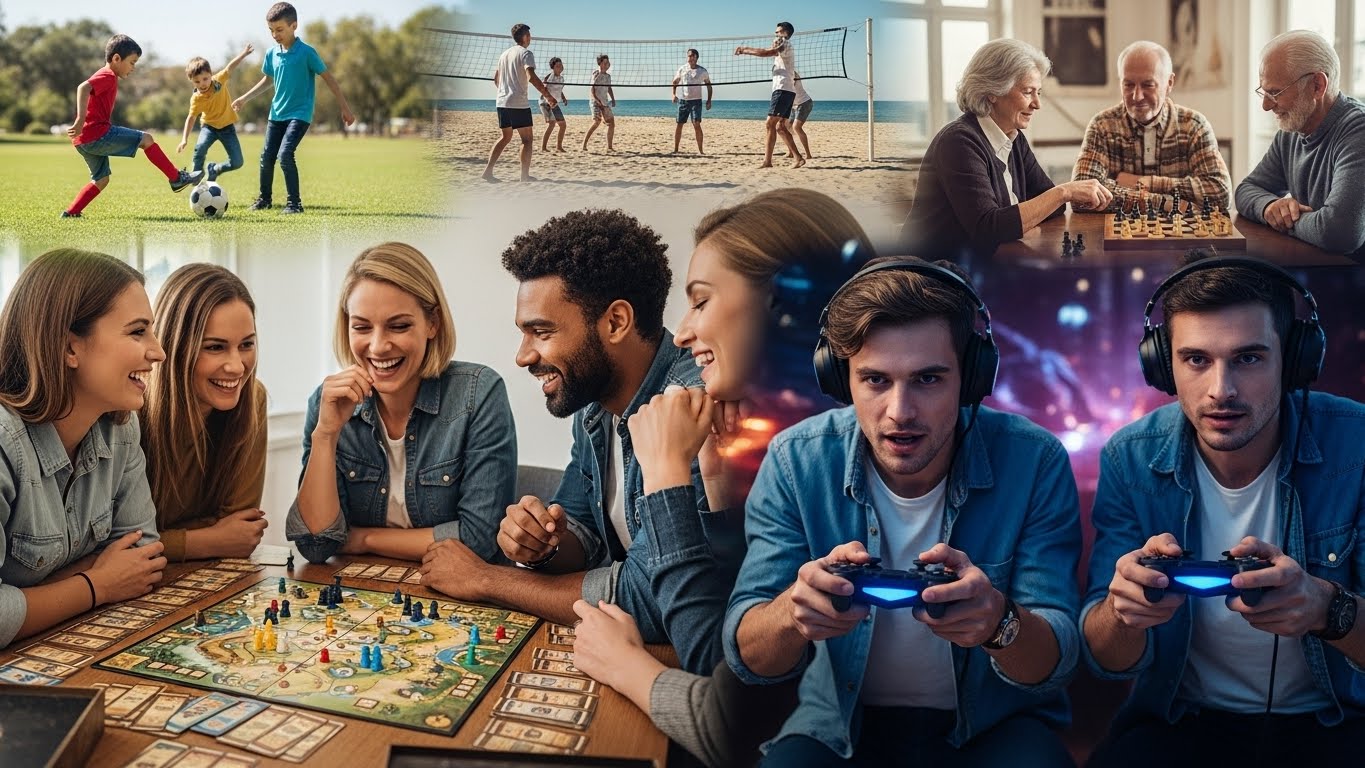
Games have evolved from simple amusements to one of the most powerful and influential cultural forces of our time. Whether it is a child playing a board game, a student learning through an educational app, or a professional competing in an esports tournament, games have become an integral part of daily life. They are not just about winning or losing—they are about imagination, strategy, creativity, and human connection. Over the decades, games have transformed entertainment, inspired innovation, and become a bridge between people and technology. In this blog, we will explore how games have changed the world, their social and psychological impact, their evolution through technology, and their promising future in shaping the next generation.
The Ancient Origins of Games
Long before screens and consoles, games were already shaping human culture. Ancient civilizations created games to teach, entertain, and connect communities. Archaeologists have discovered game boards and dice dating back thousands of years. Games like Senet from ancient Egypt and Mancala from Africa were more than just leisure—they were ways of understanding fate, strategy, and intellect.
Board games and physical play fostered creativity and competition in early societies. They served as tools for storytelling, problem-solving, and communication. These early games laid the foundation for the mental engagement and emotional joy that gaming still provides today. Over time, traditional games evolved into structured competitions like chess, which demanded logic, foresight, and patience—qualities that are still central to modern gaming experiences.
The Digital Revolution in Gaming
The 20th century marked the dawn of digital gaming, a revolution that would change entertainment forever. The first video games appeared in the 1950s and 1960s, developed by computer scientists as experiments. However, the 1970s brought gaming to the public eye with arcade hits like Pong and Space Invaders. These simple games introduced a new form of interaction—one that combined skill, reflex, and technology.
As technology advanced, so did gaming. The 1980s and 1990s introduced consoles such as the Nintendo Entertainment System and the PlayStation, bringing gaming into households around the world. Games evolved from basic mechanics to immersive experiences filled with stories, music, and exploration. Players were no longer just controlling characters—they were stepping into new worlds.
With each technological leap, gaming became more sophisticated. Three-dimensional graphics, online connectivity, and open-world designs expanded possibilities. The digital revolution did not just create new forms of play—it built an entirely new culture.
The Power of Storytelling in Games
One of the most remarkable aspects of modern gaming is its ability to tell stories. Games have become a unique medium of narrative expression, combining visuals, sound, and interaction in ways no other art form can. Unlike movies or books, games give players agency. They can make choices, shape outcomes, and influence the story’s direction.
Games such as The Last of Us, Red Dead Redemption, and Journey demonstrate that gaming is not only entertainment—it is emotional art. Through interactive storytelling, players experience love, loss, sacrifice, and triumph firsthand. This emotional connection makes gaming deeply personal.
Even smaller indie games have embraced storytelling in creative ways. They explore themes like mental health, identity, and morality, showing that games can inspire empathy and understanding. Story-driven games prove that this medium has matured into one capable of deep human expression.
The Psychological Benefits of Gaming
Beyond entertainment, games provide numerous psychological and cognitive benefits. They improve concentration, problem-solving, and multitasking skills. Puzzle and strategy games, for example, enhance logical thinking and memory, while action games boost reflexes and coordination.
Moreover, gaming fosters perseverance and resilience. Players learn through trial and error, adapting strategies until they succeed. This process mirrors real-life problem-solving and encourages critical thinking.
Gaming also offers emotional relief. It serves as a stress reducer and a form of escapism, allowing players to unwind and immerse themselves in imaginative worlds. Cooperative games strengthen communication and teamwork, while solo adventures promote self-reflection and creativity.
However, balance is crucial. Excessive gaming can lead to negative effects such as fatigue or dependency. When enjoyed responsibly, gaming becomes a valuable tool for cognitive growth, emotional well-being, and personal fulfillment.
Games as a Social Phenomenon
Gone are the days when gaming was viewed as an isolated hobby. Today, it is a global social experience that connects millions of people. Online multiplayer games allow players to collaborate, compete, and communicate across borders. Whether teaming up with friends or meeting new players, gaming has become a space for interaction and community building.
Esports has further amplified this social element. Professional players now compete in large arenas with massive audiences watching both online and in person. These events generate enthusiasm comparable to traditional sports, proving that gaming is not only a pastime but a profession and a cultural movement.
Streaming platforms and content creation have also turned gaming into a shared experience. Players are not just playing—they are performing, teaching, and entertaining. This collective energy has made gaming communities diverse and vibrant, where people find friendship, belonging, and collaboration.
The Educational and Developmental Role of Games
Games are powerful tools for learning. Educational games combine play with learning objectives, making education more engaging and effective. Interactive simulations teach students subjects like history, science, and mathematics through experience rather than memorization.
For example, strategy games develop decision-making and leadership, while creative building games encourage design thinking and innovation. Games teach persistence by rewarding effort and problem-solving. They also enhance digital literacy, preparing players for an increasingly technological world.
In workplaces, gamification has become a method to improve motivation and training. By incorporating game-like challenges and rewards into professional environments, companies are enhancing engagement and productivity. Thus, games have transcended entertainment and entered the realms of education and development.
The Cultural Influence of Games
Games have become a defining part of modern culture. Characters like Mario, Sonic, and Master Chief are recognized icons worldwide. Games influence music, fashion, film, and art. Popular game soundtracks inspire orchestral performances, and game-inspired movies draw massive audiences.
Gaming has also shaped language and humor, introducing new slang and expressions into everyday speech. Online communities generate trends, memes, and creative content, making gaming a cultural force that continuously evolves.
Moreover, games reflect social values and issues. Developers increasingly address themes like diversity, equality, and environmental awareness. These narratives inspire reflection and discussion, making games not just entertainment but commentary on modern society.
The Business of Gaming
The gaming industry has become one of the most powerful economic sectors in the world. It has surpassed music and film in global revenue, thanks to a diverse ecosystem of consoles, mobile platforms, and online services. The accessibility of smartphones has opened gaming to billions of users, expanding the industry’s reach.
Independent developers have also found success through creativity and innovation. The rise of digital distribution platforms has made it easier for small studios to share their creations with the world. This democratization of gaming has led to a rich variety of experiences catering to every taste and interest.
Monetization has evolved from one-time purchases to live service models, downloadable content, and virtual goods. Subscription services now offer access to vast game libraries, making high-quality gaming more affordable and accessible. The financial growth of gaming has created millions of jobs in design, programming, music, marketing, and storytelling, shaping it into a cornerstone of the global economy.
The Relationship Between Technology and Games
Games and technology share a symbiotic relationship—each drives the other’s evolution. Gaming demands innovation, and technology responds by pushing boundaries. Graphics processing, artificial intelligence, and virtual reality are all products of this dynamic interaction.
Virtual reality and augmented reality are revolutionizing the way we play, offering experiences that blur the line between physical and digital worlds. Players can now step inside the game, interact naturally, and feel part of the story. Artificial intelligence enhances gameplay by creating adaptive and intelligent opponents, personalizing experiences for every player.
Cloud gaming is another groundbreaking advancement, allowing players to stream games directly from servers without expensive hardware. This development makes gaming more inclusive, breaking barriers of cost and accessibility. As technology continues to evolve, the future of gaming promises even greater interactivity, realism, and creativity.
The Future of Games
The future of gaming is filled with possibilities that go beyond entertainment. As artificial intelligence, virtual reality, and blockchain technologies advance, gaming will continue to evolve into more immersive and personalized experiences. The rise of the metaverse—a shared digital universe—could allow players to live, work, and play in connected virtual worlds.
Inclusivity and diversity will define the next phase of gaming. Developers are striving to make games accessible to everyone, regardless of ability or background. Games will also continue to influence other industries, from education and healthcare to art and science, becoming tools for creativity, empathy, and innovation.
Sustainability will also play a crucial role. With growing awareness of environmental challenges, the gaming industry is seeking eco-friendly production methods and digital alternatives to reduce its carbon footprint.
The future of gaming will not just be about technology but about connection, creativity, and purpose. It will redefine what it means to play and how play shapes humanity.
Conclusion
Games are more than entertainment—they are a reflection of human creativity, intelligence, and emotion. From ancient board games to immersive virtual realities, they have evolved alongside civilization, teaching us, challenging us, and connecting us.
They inspire imagination, strengthen communities, and push technological boundaries. Gaming is not only about pressing buttons or scoring points—it is about experiencing stories, solving problems, and exploring possibilities.
As we move into a future where technology and creativity intertwine, games will continue to influence how we think, learn, and connect. They are a testament to the power of play, proving that in every challenge, every level, and every story, there lies an opportunity to grow and imagine.
In the end, games remind us that play is not merely a break from life—it is an essential part of being human, a bridge between imagination and reality, and a symbol of our endless curiosity and creativity.