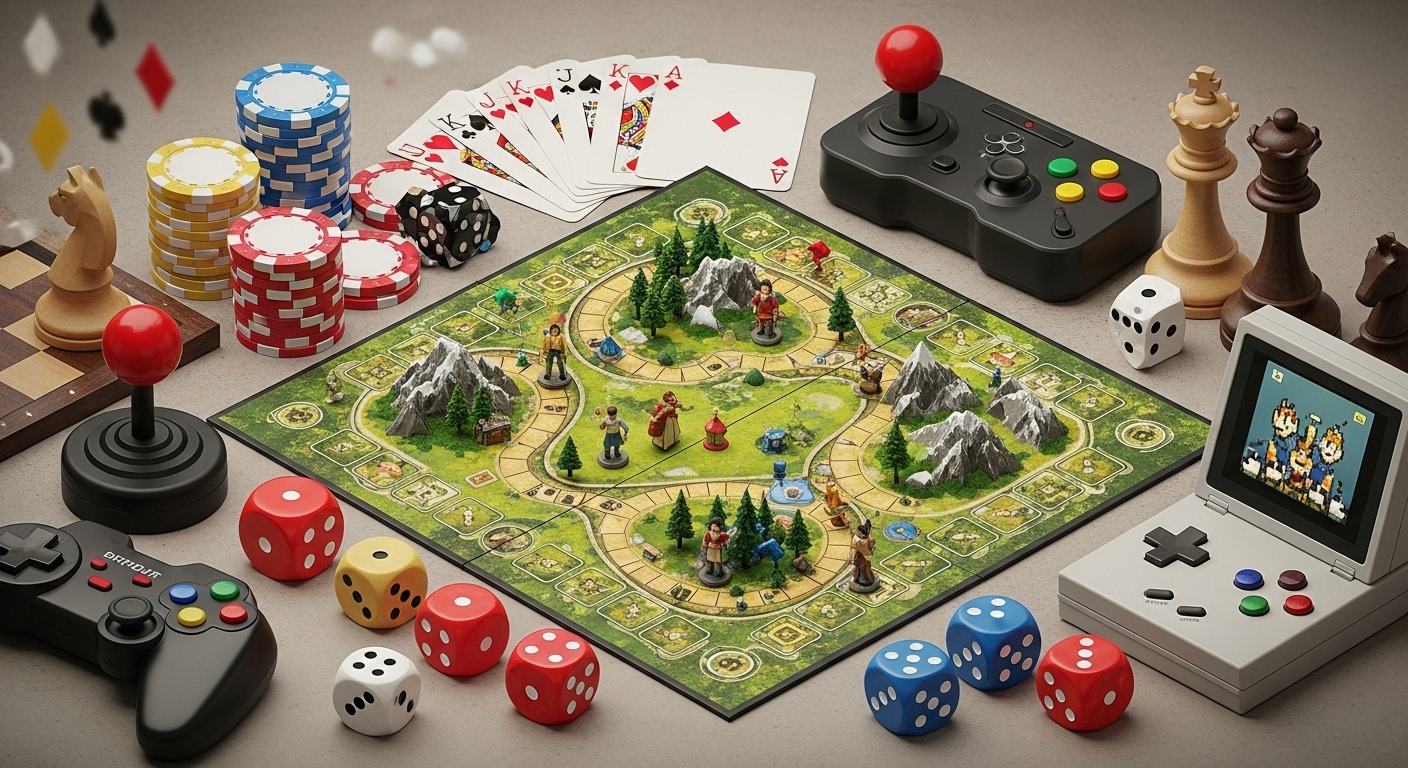

Introduction: The Timeless Appeal of Games
Games have been a part of human culture for thousands of years. Whether through ancient board games, physical sports, or modern digital entertainment, games serve as a universal pastime that brings joy, challenge, and connection. They provide a way to escape reality, test skills, engage with others, and express creativity.
In this blog, we explore the fascinating journey of games—from their earliest origins to the diverse forms they take today—and examine why games continue to captivate millions around the world.
The Origins of Games: Ancient Play and Tradition
The history of games stretches back to ancient civilizations. Archaeologists have uncovered artifacts like dice, game boards, and playing pieces dating back thousands of years. Games such as Senet in Egypt, Go in China, and Mancala across Africa represent some of the earliest structured games.
These games were not merely for entertainment. They often had spiritual, educational, or social functions, teaching strategy, fostering community, and even simulating real-life scenarios. The enduring popularity of many traditional games highlights their fundamental role in human society.
The Rise of Board Games: Strategy, Chance, and Social Interaction
Board games have been a staple of leisure and social interaction for centuries. Classics like chess, checkers, and backgammon challenge players to think strategically and anticipate opponents’ moves. Games involving chance, such as Monopoly or Risk, combine luck with decision-making to create dynamic experiences.
Modern board games have experienced a renaissance in recent decades. Designers have introduced innovative mechanics, cooperative play, and storytelling elements. Tabletop gaming communities thrive worldwide, celebrating both casual fun and competitive play.
Card Games: Simplicity and Complexity in a Deck
Card games offer a flexible and portable form of play, ranging from simple matching games to complex collectible card games. Traditional card games like Poker, Bridge, and Solitaire have entertained generations, combining skill, memory, and probability.
In recent years, collectible card games such as Magic: The Gathering and digital versions like Hearthstone have blended strategy, deck-building, and fantasy themes. These games often feature evolving meta-games, competitive tournaments, and vibrant communities.
The Impact of Video Games: A Digital Revolution
The advent of video games in the late 20th century revolutionized the gaming landscape. Starting with simple arcade games, the industry rapidly expanded into home consoles, personal computers, and mobile devices.
Video games introduced immersive worlds, complex narratives, and interactive mechanics. Genres diversified to include action, adventure, simulation, role-playing, puzzle, and more. Video games became not only a form of entertainment but also a platform for artistic expression and social connection.
Mobile Gaming: Gaming in the Palm of Your Hand
The rise of smartphones has made gaming accessible to billions worldwide. Mobile games, often designed for short bursts of play, have introduced millions of new players to gaming. Titles like Candy Crush, Clash of Clans, and PUBG Mobile have achieved massive popularity.
Mobile gaming’s success lies in its convenience, social features, and frequent updates. It has also driven innovation in monetization models such as free-to-play with in-app purchases.
The Social Dimension of Games: Building Communities and Friendships
Games have always been social by nature. Multiplayer board games, card games, and video games create opportunities for players to connect, collaborate, and compete. Online gaming communities allow people to forge friendships across borders and cultures.
Social games often encourage teamwork, communication, and shared goals. Platforms hosting multiplayer experiences foster vibrant communities where players exchange strategies, organize events, and celebrate achievements.
Educational and Therapeutic Uses of Games
Beyond entertainment, games serve valuable educational and therapeutic purposes. Educational games engage learners with interactive content that enhances skills in areas like math, language, and critical thinking.
Therapeutic games support mental health, rehabilitation, and cognitive training. They provide safe environments to practice social skills, reduce anxiety, and improve memory.
The adaptability and engagement of games make them powerful tools for learning and healing.
The Psychology of Gaming: Why We Play
Understanding why games are so compelling involves exploring the psychology behind play. Games tap into intrinsic motivations such as mastery, achievement, exploration, and social connection.
The challenge and reward cycles stimulate dopamine release, creating satisfaction and encouraging continued engagement. Games also provide a sense of agency, allowing players to influence outcomes and express creativity.
Recognizing these psychological drivers helps developers create more engaging experiences and players to approach gaming mindfully.
Challenges in the Gaming World: Balancing Enjoyment and Responsibility
While games offer many benefits, they also come with challenges. Issues like excessive screen time, gaming addiction, and toxic behavior in online communities require attention.
Developers, parents, and players share responsibility for promoting healthy gaming habits, setting boundaries, and fostering respectful environments. The industry is increasingly focused on accessibility, diversity, and ethical design.
By addressing these challenges, games can remain positive and inclusive spaces for all.
The Future of Games: Innovation and Inclusivity
Looking ahead, games are poised for continued innovation. Emerging technologies like virtual reality, augmented reality, and artificial intelligence promise new forms of immersion and interaction.
Inclusivity is becoming central to game design, with efforts to represent diverse cultures, identities, and abilities. Games are evolving to be more adaptive and accessible to a wider audience.
The boundary between games and other media will continue to blur, creating rich hybrid experiences that entertain, educate, and inspire.
Conclusion: The Enduring Power of Games
Games, in their countless forms, have an unparalleled ability to engage, challenge, and connect people. From ancient boards to digital worlds, they reflect human creativity, culture, and the desire for play.
As games continue to evolve, they will remain a vital part of our social fabric—inviting us to explore new worlds, share moments with others, and discover more about ourselves.
Whether you play for fun, competition, learning, or socializing, games offer endless opportunities to enjoy, grow, and connect.