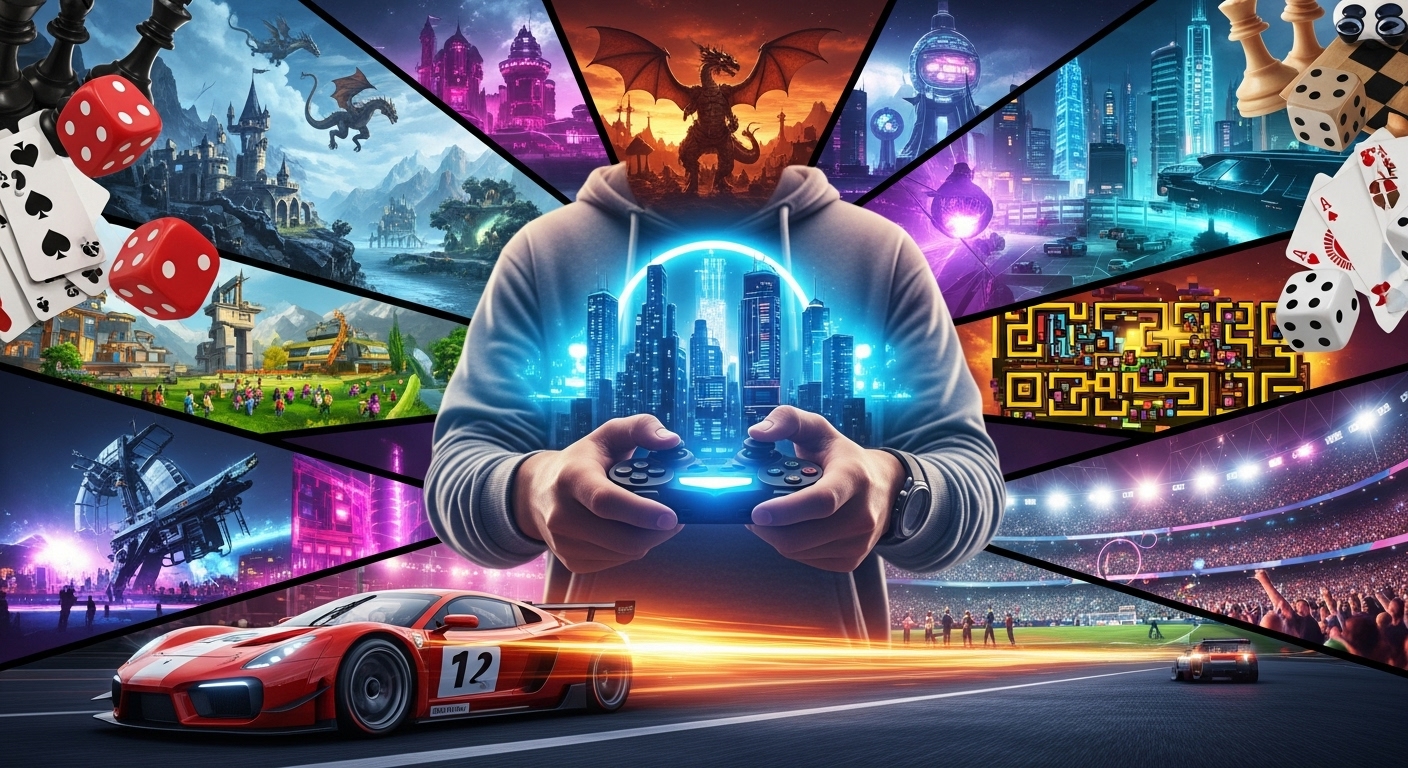

Introduction: The Ever-Growing Universe of Games
Games have been an integral part of human culture for centuries, evolving from simple physical contests to highly sophisticated digital experiences. They serve as more than mere entertainment; games provide a platform for creativity, strategic thinking, and social interaction. From traditional board games played around family tables to massive online multiplayer adventures, games encompass a vast spectrum that appeals to people of all ages and interests. In this blog, we explore different types of games, the elements that make them unique, and how they shape the way we think, interact, and learn.
The Rise of Digital Gaming
Digital gaming has transformed the way people engage with entertainment. Video games are no longer confined to arcades or consoles; they are accessible on mobile devices, personal computers, and streaming platforms. Modern video games combine stunning graphics, immersive storytelling, and complex mechanics that challenge both the mind and reflexes. Games like role-playing adventures allow players to explore entire worlds, make critical decisions, and shape their characters’ destinies. The technological evolution of gaming has also introduced virtual reality and augmented reality, pushing the boundaries of what is possible and providing experiences that feel closer to real life than ever before.
Board Games: Strategy and Social Interaction
While digital games dominate the modern market, traditional board games remain relevant because of their unique social aspects. Games such as chess, Settlers of Catan, and Ticket to Ride require strategic thinking, planning, and negotiation skills. Unlike video games, board games encourage face-to-face interaction, making them a powerful tool for building relationships and fostering teamwork. Additionally, many modern board games incorporate storytelling elements, transforming a simple board into a canvas for imagination and creativity. The tactile nature of board games—the feel of the pieces, the layout of the board—adds a dimension that digital experiences cannot replicate.
Card Games: Simplicity and Depth
Card games have a unique appeal because of their simplicity and flexibility. Classic games like poker, bridge, and rummy test memory, strategy, and bluffing skills, while collectible card games like Magic: The Gathering and Hearthstone allow players to build unique decks and compete in strategic duels. Card games combine luck and skill in ways that keep players engaged over long periods. They can be played anywhere with minimal equipment, making them one of the most accessible forms of gaming. Moreover, the evolving rules and strategies in modern card games encourage critical thinking and adaptability, which are valuable skills both inside and outside the game world.
Puzzle Games: The Art of Problem-Solving
Puzzle games occupy a special place in the gaming universe because they challenge the mind more than the reflexes. Games such as Sudoku, Tetris, and Portal require players to recognize patterns, plan ahead, and think creatively. Puzzle games improve cognitive skills, enhance problem-solving abilities, and provide a sense of accomplishment when challenges are overcome. Modern puzzle games often combine narrative and mechanics, creating a deeply engaging experience that stimulates both intellect and imagination. These games are particularly appealing to individuals who enjoy mental challenges and seek a relaxing yet intellectually rewarding pastime.
Role-Playing Games: Immersion and Creativity
Role-playing games, or RPGs, offer players the chance to step into someone else’s shoes and explore fictional worlds. In tabletop RPGs like Dungeons and Dragons, players create characters, embark on adventures, and collaborate with others to overcome obstacles. Video game RPGs, such as The Witcher series or Skyrim, provide vast, interactive worlds where choices have consequences and stories unfold dynamically. Role-playing games encourage creativity, empathy, and strategic thinking. They allow players to explore moral dilemmas, develop unique problem-solving strategies, and engage in storytelling, making RPGs one of the most versatile and enriching forms of gaming.
Sports Games: Realism and Competition
Sports games replicate real-world activities in a competitive digital or physical format. Whether it is a football video game or a virtual tennis simulation, sports games appeal to those who enjoy realism and competitive challenges. These games allow players to experience the thrill of athletic performance, understand the nuances of strategy, and engage in friendly competition. The rise of eSports has transformed sports games into professional competitions with massive audiences and lucrative careers. Beyond entertainment, sports games also promote discipline, teamwork, and critical thinking, as players must master rules, tactics, and timing to succeed.
Educational Games: Learning Through Play
Educational games are designed to combine fun with learning. They target children, students, and even adults, making complex topics easier to understand. Games focused on language skills, mathematics, or history can turn studying into an engaging activity rather than a chore. Educational games also promote critical thinking, problem-solving, and creativity, providing a hands-on approach to learning that traditional methods may lack. By leveraging game mechanics like rewards, challenges, and progression systems, educational games transform motivation into a powerful tool for personal and intellectual growth.
Indie Games: Innovation and Originality
Independent or indie games often bring fresh perspectives to the gaming world. Unlike mainstream games, which are sometimes limited by commercial constraints, indie developers experiment with unique art styles, storytelling techniques, and gameplay mechanics. Titles like Hollow Knight, Stardew Valley, and Celeste are celebrated for their originality, emotional depth, and innovation. Indie games remind us that gaming is not just about high budgets and graphics but about creativity, vision, and meaningful experiences. They often push boundaries, introduce niche concepts, and offer intimate gameplay experiences that resonate deeply with players.
The Psychological Benefits of Gaming
Beyond entertainment, games provide several psychological benefits. Many games improve cognitive skills such as memory, attention, and problem-solving. Multiplayer games promote social interaction, teamwork, and communication skills. Role-playing and story-driven games encourage empathy and moral reasoning by immersing players in diverse experiences and perspectives. Even casual games can reduce stress and provide relaxation through engaging challenges and rewarding progress. The mental stimulation provided by games makes them more than just leisure activities—they are tools for personal growth and mental exercise.
The Future of Gaming
The gaming industry continues to evolve at a remarkable pace. Advances in artificial intelligence, virtual reality, and cloud gaming are shaping the next generation of gaming experiences. We can expect games that respond more intelligently to player actions, offer hyper-realistic worlds, and provide unprecedented social connectivity. Gaming is also becoming more inclusive, with greater accessibility for people of different abilities and backgrounds. The future promises a world where games are not only entertainment but also powerful tools for learning, creativity, and connection. The possibilities are virtually limitless, as technology and imagination continue to merge.
Conclusion: Games as a Reflection of Human Creativity
Games are much more than a pastime; they are a reflection of human creativity, curiosity, and social nature. From board games to video games, puzzles to role-playing adventures, each type of game offers unique experiences that challenge, educate, and entertain. They help us think critically, connect with others, and explore new ideas and worlds. As gaming technology and design continue to advance, the potential for games to influence culture, education, and personal development will only grow. Whether playing alone or with friends, games provide a unique blend of fun, challenge, and imagination that will remain an essential part of human life for generations to come.