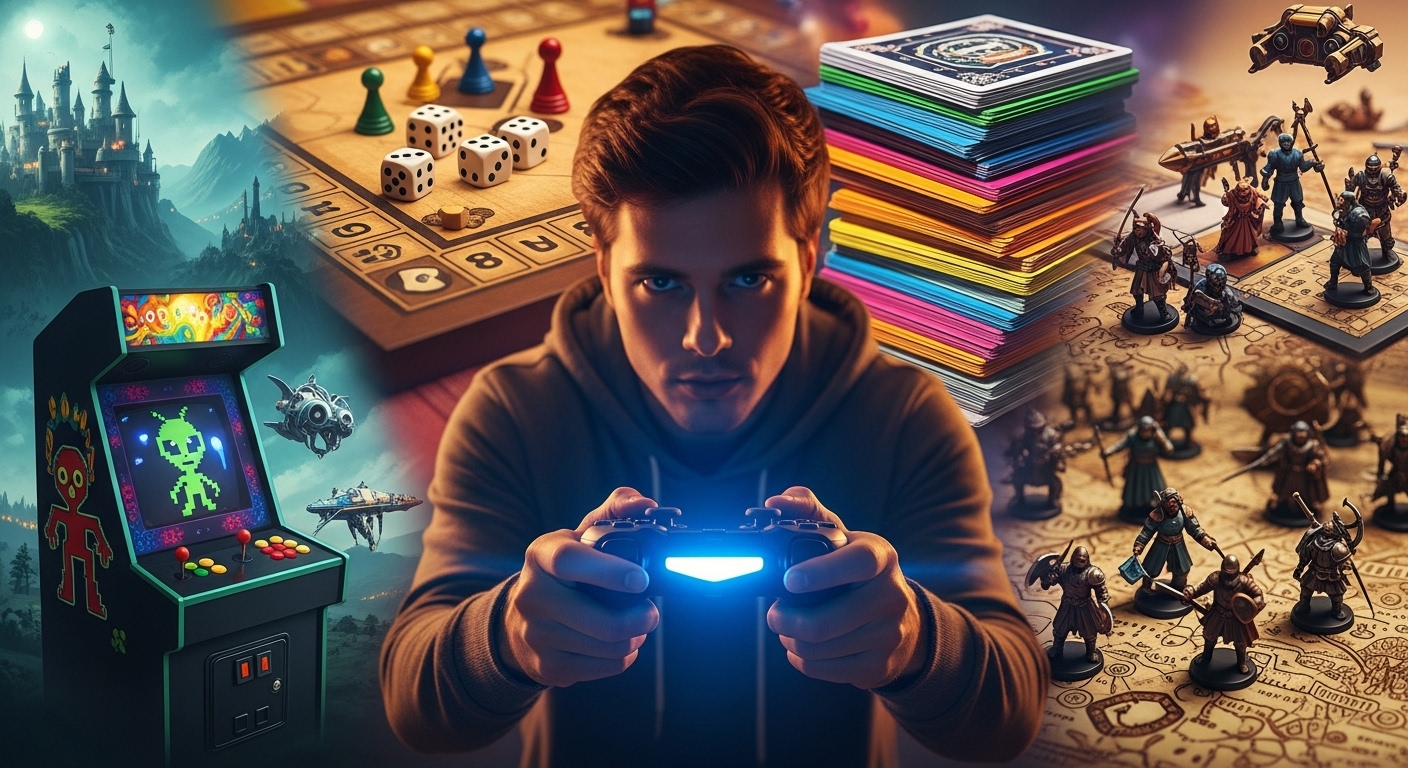
Gaming has evolved far beyond being a mere pastime. It has become a global cultural phenomenon that brings people together, sparks creativity, and offers an endless variety of experiences. From casual mobile games to complex, story-driven RPGs, the world of gaming is more diverse and immersive than ever before. In this blog post, we’ll delve into the different types of games, the factors contributing to gaming’s rise, and why gaming is shaping the future of entertainment.
The Diversity of Games
One of the most exciting aspects of the gaming world today is its incredible diversity. There is truly something for everyone, whether you’re a casual player or a hardcore gamer. Let’s break down some of the most popular types of games that dominate the industry.
Action and Adventure Games
Action games focus on fast-paced gameplay, requiring quick reflexes and strategic thinking. These games often feature intense combat, platforming, or exploration elements. Titles like Call of Duty, Assassin’s Creed, and The Legend of Zelda have become iconic within this category. Adventure games, which can sometimes overlap with action, tend to focus more on story and exploration. Games like The Last of Us and Uncharted are prime examples of how action and adventure blend seamlessly to create memorable experiences.
Role-Playing Games (RPGs)
RPGs have long been a staple in the gaming community. These games allow players to take on the role of a character, often in a fantasy or sci-fi setting, and embark on quests or missions. What sets RPGs apart is the ability to level up characters, make choices that affect the game’s outcome, and explore vast open worlds. Notable examples include Final Fantasy, The Elder Scrolls V: Skyrim, and Cyberpunk 2077.
The beauty of RPGs lies in their depth and the emotional connection they allow players to build with the characters and stories. These games provide a sense of progression and achievement that few other genres can match.
Strategy Games
Strategy games require players to think critically and plan their moves. These games often involve managing resources, building structures, and commanding armies or factions. Whether it’s a turn-based strategy game like Civilization or a real-time strategy (RTS) game like Starcraft, strategy games engage players with complex mechanics that require both tactical and long-term planning.
In addition to traditional strategy games, we’ve seen a rise in multiplayer online battle arena (MOBA) games like League of Legends and Dota 2. These team-based games emphasize cooperation, strategic planning, and reflexes in a competitive setting.
Simulation and Sports Games
Simulation games allow players to experience real-world activities in a virtual setting. Games like The Sims give players the freedom to create and manage their own simulated environments. Racing and sports games, like FIFA, NBA 2K, and Gran Turismo, simulate real-world sports and provide a competitive yet accessible gaming experience.
The appeal of simulation and sports games is their ability to recreate real-life experiences, often with a level of detail that makes the virtual world feel incredibly immersive. These games cater to a wide range of audiences, from casual players who enjoy quick play sessions to serious gamers who aim to perfect their skills.
Indie Games
Indie games have seen a meteoric rise in popularity in recent years. These games are typically developed by small teams or even solo developers and are often experimental or unconventional in their design. Indie games like Hollow Knight, Stardew Valley, and Celeste showcase the creativity and innovation that can emerge when developers are given the freedom to push boundaries without the constraints of large studios.
Indie games often focus on unique art styles, emotional storytelling, or new gameplay mechanics, which sets them apart from mainstream titles. The success of indie games demonstrates that quality and creativity can shine through, even without a huge budget or marketing machine behind them.
The Rise of Multiplayer and Online Gaming
While single-player experiences still dominate many gaming platforms, multiplayer and online games have taken the spotlight in recent years. The ability to connect with friends or strangers from around the world has revolutionized the way we play games.
Cooperative and Competitive Play
Multiplayer games can be divided into two primary categories: cooperative and competitive. Cooperative games allow players to team up to complete missions or challenges together. Games like Overcooked and Left 4 Dead focus on cooperation, requiring players to work as a team to achieve success.
On the other hand, competitive multiplayer games pit players against each other. Popular games like Fortnite, Apex Legends, and Valorant offer fast-paced action with a focus on skill and strategy. Competitive gaming, or esports, has become a global industry, with professional tournaments and millions of viewers tuning in to watch top players battle it out.
Massively Multiplayer Online Games (MMOs)
Massively multiplayer online games (MMOs) take multiplayer gaming to the next level by allowing thousands of players to interact in a shared, persistent world. World of Warcraft and Final Fantasy XIV are two of the most well-known MMOs, offering players the chance to explore expansive worlds, complete quests, and interact with others in real-time.
MMOs are unique in that they offer an ever-evolving experience. With regular updates, expansions, and live events, these games can provide an ongoing, dynamic world for players to immerse themselves in for years.
Gaming’s Cultural Impact
Gaming has long since crossed over from a niche hobby into a mainstream cultural activity. Esports, once considered a fringe interest, has now become a global phenomenon. The rise of streaming platforms like Twitch has turned gamers into influencers, and titles like League of Legends and Fortnite regularly draw in millions of viewers for major tournaments.
Moreover, gaming has influenced other forms of media, with successful franchises like The Witcher being adapted into television shows, or Halo being turned into a live-action series. The lines between gaming, film, television, and music are increasingly blurred as the worlds of entertainment intersect in exciting new ways.
The Future of Gaming: What’s Next?
Looking ahead, the future of gaming is more promising than ever. With advancements in technology, we’re seeing the emergence of virtual reality (VR) and augmented reality (AR) gaming. These technologies are bringing new levels of immersion, allowing players to interact with games in ways that were once only imaginable in science fiction.
Cloud gaming is another trend that’s expected to revolutionize the industry. Services like Google Stadia and Xbox Cloud Gaming allow players to stream games directly to their devices without the need for expensive hardware. This could make gaming more accessible than ever before, eliminating the need for high-end gaming PCs or consoles.
Lastly, the growing focus on diversity and inclusivity in the gaming community is a positive shift. Games are increasingly being developed to represent a wider range of cultures, genders, and identities, making the gaming world more welcoming to everyone.
Conclusion
The world of gaming is vast, diverse, and rapidly evolving. From immersive single-player experiences to competitive multiplayer games, the industry continues to innovate and push boundaries. As technology advances and gaming becomes even more integrated into our daily lives, the future of gaming promises to be an exciting journey full of new opportunities for both players and creators alike. Whether you’re a casual gamer or a hardcore enthusiast, there’s no denying that gaming is here to stay—and it’s only getting better.