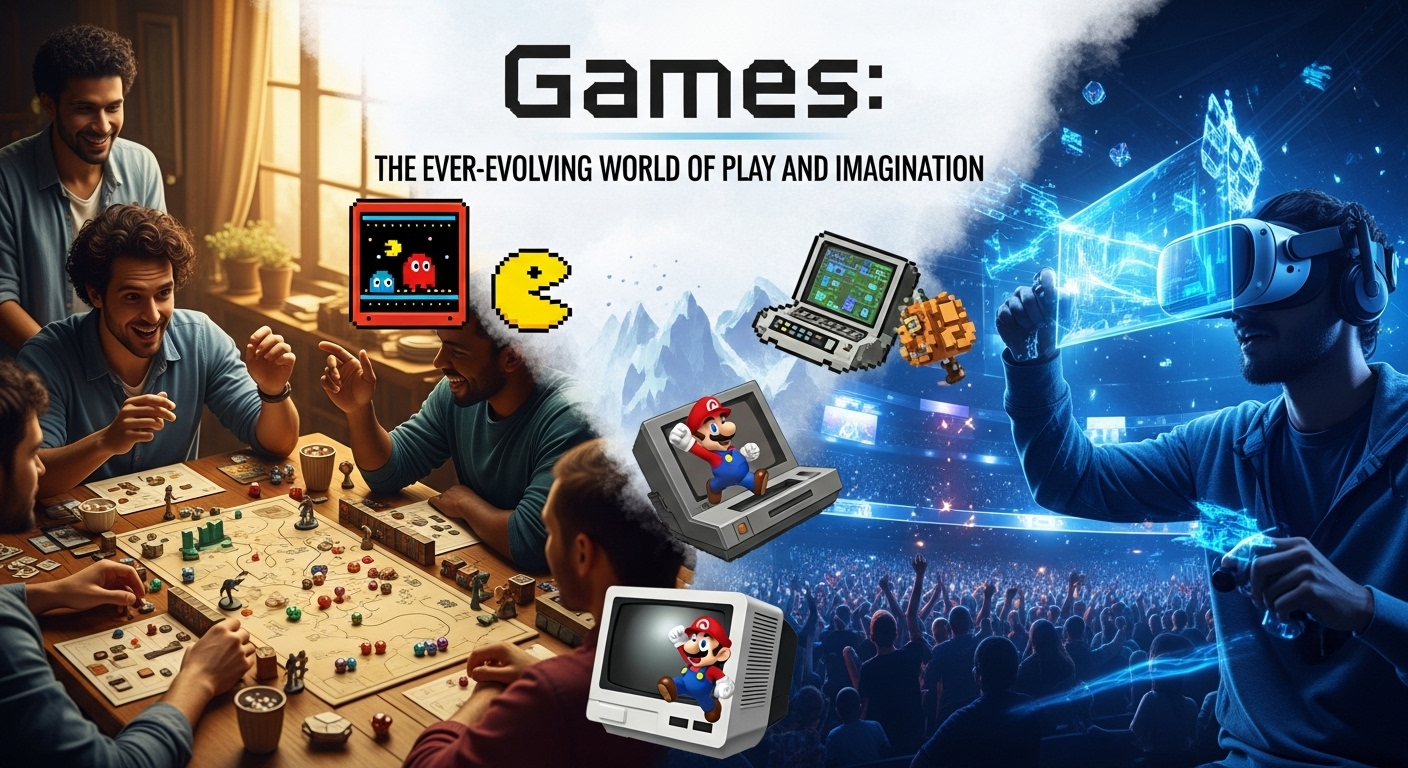

Introduction: The Enduring Appeal of Games
Games have always been an integral part of human culture. From ancient board games played on carved stone to modern virtual reality experiences, games capture our imagination, challenge our intellect, and bring people together. Their appeal transcends age, geography, and culture, making them a universal form of entertainment and expression. The world of games is vast and diverse, encompassing everything from simple pastimes to highly strategic competitions, each offering unique experiences that stimulate the mind, body, and social interactions.
The Evolution of Games: From Pastimes to Digital Realms
The history of games is as old as civilization itself. Ancient societies created games not only for entertainment but also for education, spiritual rituals, and social bonding. Games like Senet in Egypt or Go in China laid the foundation for structured gameplay and strategic thinking. Over time, games evolved to include competitive sports, card games, and board games, each reflecting the societal values and technological advancements of their era.
The digital revolution has transformed the gaming landscape entirely. Video games, online multiplayer platforms, and immersive virtual reality experiences have created a new dimension of play. Modern games are no longer limited by physical components; they offer expansive worlds, interactive storytelling, and complex challenges that were unimaginable a few decades ago. This evolution has broadened the reach of games, turning them into a global phenomenon that continues to grow exponentially.
The Psychology of Play: Why Games Matter
Games are not merely a source of entertainment—they also have profound psychological benefits. They engage players in problem-solving, strategic thinking, and decision-making, often under time constraints or competitive pressure. Games also provide a safe space for experimentation, allowing players to explore different scenarios, test hypotheses, and learn from mistakes without real-world consequences.
Moreover, games satisfy the human need for achievement and mastery. Progressing through levels, unlocking new abilities, or earning high scores triggers a sense of accomplishment that is both motivating and rewarding. Social games, in particular, foster collaboration and communication, helping players develop interpersonal skills and build relationships. The psychological appeal of games explains why they remain popular across generations and cultures.
Categories of Games: A World of Variety
The gaming universe is vast, and understanding its categories helps us appreciate the diversity of experiences it offers. Games can be broadly classified into several types:
Board Games and Strategy Games
Board games have been a staple of human leisure for centuries. Classic games like Chess, Monopoly, and Settlers of Catan emphasize strategy, planning, and resource management. These games challenge players to think critically, anticipate opponents’ moves, and make decisions that have long-term consequences. Modern board games often incorporate storytelling elements and cooperative gameplay, adding depth and immersion to the experience.
Card Games and Collectible Games
Card games range from traditional decks like Poker and Bridge to collectible card games such as Magic: The Gathering and Pokémon. These games blend luck and skill, encouraging players to develop strategies while adapting to unpredictable outcomes. Collectible card games also introduce an element of collection and customization, allowing players to express individuality through their decks.
Video Games and Interactive Digital Worlds
Video games have redefined the concept of play. They encompass a wide array of genres, from action-packed shooters to intricate role-playing adventures. These games immerse players in dynamic worlds where storytelling, exploration, and skill development converge. Multiplayer online games foster community and competition on a global scale, while single-player narratives offer deeply personal experiences that resonate with players emotionally.
Sports and Physical Games
Physical games and sports remain a timeless form of play, promoting fitness, coordination, and teamwork. Traditional sports like soccer, basketball, and tennis are universally recognized, while modern variations like esports blend physical dexterity with strategic thinking. Sports also serve as cultural rituals, bringing communities together and creating shared experiences that transcend individual achievements.
Puzzle and Brain Games
Puzzle games challenge the intellect and problem-solving abilities of players. Sudoku, crosswords, and logic puzzles sharpen cognitive skills, enhance memory, and improve analytical thinking. Digital puzzle games often combine creative mechanics with storytelling, offering both mental stimulation and entertainment. These games highlight the joy of discovery and the satisfaction of overcoming challenges.
The Social Dimension of Gaming
One of the most compelling aspects of games is their ability to connect people. Multiplayer games, both physical and digital, create communities of players who share common interests and experiences. Gaming fosters teamwork, negotiation, and healthy competition, helping individuals develop social skills that extend beyond the game itself. Online platforms enable players from different parts of the world to interact, collaborate, and compete, breaking down geographical and cultural barriers.
Games as Educational Tools
Beyond entertainment, games have significant educational value. Educational games are designed to teach specific skills, concepts, or knowledge while maintaining engagement. These games make learning interactive, allowing students to explore subjects in a hands-on, experiential manner. Historical simulations, science-based puzzles, and language-learning games are just a few examples of how games enhance cognitive development and make learning enjoyable.
Gamification, the integration of game mechanics into non-game contexts, has also gained popularity in education and professional training. By incorporating points, levels, and rewards, educators and trainers motivate participants to achieve goals and retain information more effectively. Games, therefore, serve as powerful tools for knowledge acquisition and personal growth.
The Future of Gaming: Immersion and Innovation
The future of games promises even more exciting developments. Virtual reality and augmented reality technologies are pushing the boundaries of immersion, allowing players to experience digital worlds as if they were real. Artificial intelligence is enhancing game dynamics, creating adaptive challenges and personalized experiences that respond to player behavior.
Cloud gaming and streaming services are making high-quality gaming more accessible, removing the need for expensive hardware and enabling players to enjoy complex games on various devices. Moreover, games are increasingly recognized as a form of art, with intricate narratives, stunning visuals, and innovative mechanics that rival traditional storytelling mediums. The convergence of technology and creativity ensures that gaming will continue to evolve in ways that surprise and inspire.
Cultural Impact of Games
Games have a profound cultural impact, shaping trends, social norms, and creative expression. They influence music, fashion, literature, and cinema, creating shared cultural references and experiences. Gaming conventions and tournaments celebrate this culture, bringing fans, developers, and creators together to share their passion. The rise of gaming influencers and content creators has further amplified the reach and significance of games, making them a central component of contemporary entertainment.
Challenges in the Gaming World
Despite the numerous benefits and joys of gaming, the industry faces challenges. Addiction, excessive screen time, and exposure to inappropriate content are concerns that affect players of all ages. Game developers and parents must balance entertainment with responsibility, promoting healthy gaming habits. Diversity and representation are also ongoing issues, as the industry strives to create inclusive experiences that reflect the richness of global cultures. Addressing these challenges is essential to ensuring that gaming remains a positive and enriching activity for everyone.
Conclusion: Celebrating the Joy of Games
Games are far more than mere pastimes; they are a reflection of human creativity, intelligence, and social connection. They challenge the mind, entertain the spirit, and foster bonds between individuals. Whether played on a board, a digital screen, or a sports field, games offer unique experiences that captivate players and enrich their lives.
The world of games continues to expand, embracing innovation, education, and cultural expression. As technology advances and new ideas emerge, games will remain a vibrant and essential part of human life. By understanding the history, psychology, and impact of games, we can appreciate their significance and celebrate the art of play in all its forms.