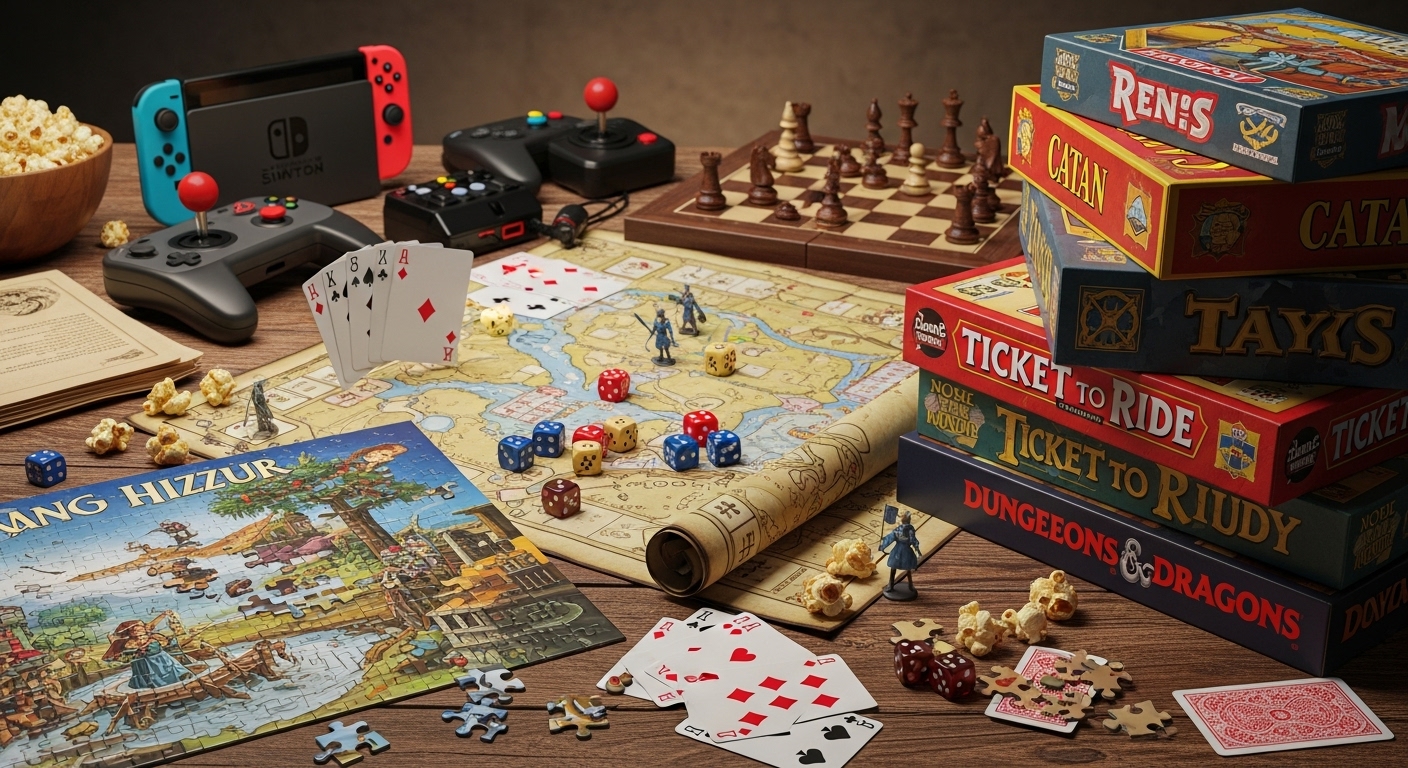

Introduction: The Timeless Appeal of Games
Games have been an essential part of human culture for centuries. From ancient board games played on carved stones to immersive virtual reality experiences, the essence of gaming has always been to challenge the mind, spark creativity, and bring people together. What makes games truly fascinating is their diversity, not only in form and style but also in the ways they engage our senses and intellect. While some games focus on strategy, others rely on reflexes, storytelling, or cooperation. Regardless of the type, games hold a universal appeal because they provide an escape from daily life, a platform for social interaction, and an opportunity to test one’s skills.
The Evolution of Gaming: From Board Games to Digital Adventures
Long before the invention of computers and consoles, humans enjoyed games that tested intelligence and chance. Games like chess, Go, and backgammon emerged thousands of years ago, emphasizing strategic thinking and foresight. These games were not just entertainment but also a reflection of culture, philosophy, and societal values. As centuries passed, the invention of playing cards and dice-based games introduced new forms of chance and competition.
With the advent of technology, gaming evolved into digital forms. The first video games were simple, yet they sparked a revolution in entertainment. Titles such as Pong and Space Invaders may seem primitive by today’s standards, but they laid the groundwork for the complex, story-driven, and visually stunning games that dominate the market today. Video games have grown into a multi-billion-dollar industry, captivating millions across the globe with genres ranging from role-playing adventures to competitive sports simulations.
The Psychology Behind Games: Why We Play
Understanding why humans are drawn to games involves a deep dive into psychology. Games tap into the human need for challenge, reward, and social connection. When playing a game, the brain releases dopamine—a chemical associated with pleasure and motivation—especially when players achieve milestones or overcome obstacles. This creates a positive feedback loop, making players eager to continue.
Moreover, games offer a safe space to experiment with decision-making and problem-solving. In strategy games, players must plan several moves ahead and anticipate opponents’ actions, honing analytical skills. In role-playing games, players explore different identities, morals, and scenarios, promoting empathy and creativity. Cooperative games, on the other hand, enhance teamwork and communication, fostering a sense of belonging and accomplishment. The psychological benefits of gaming extend beyond entertainment; they can improve cognitive skills, relieve stress, and even teach valuable life lessons.
Unique Gaming Experiences: Beyond the Ordinary
While traditional games continue to be popular, unique games are capturing the imagination of players worldwide. These games break away from conventional rules and mechanics, offering experiences that are unpredictable and memorable. One example is narrative-driven games where player choices significantly alter the storyline, creating a deeply personalized experience. These games often blur the line between gaming and storytelling, immersing players in worlds where their decisions have real consequences.
Another trend in unique gaming is the fusion of real-life elements with virtual challenges. Augmented reality (AR) games overlay digital content onto the physical world, encouraging players to explore their surroundings in innovative ways. Virtual reality (VR) games, on the other hand, transport players entirely into fantastical worlds, offering immersive experiences that engage sight, sound, and motion. These technologies have revolutionized gaming by making it more interactive, social, and physically engaging.
Indie Games: Small Studios, Big Creativity
In recent years, indie games have emerged as a hotbed of creativity and innovation. Unlike big-budget productions, indie games often take risks that larger studios cannot afford. They experiment with art styles, unconventional storytelling, and unique gameplay mechanics. Games such as Hollow Knight and Celeste have received critical acclaim for their intricate designs, challenging gameplay, and emotionally resonant narratives.
Indie developers often focus on passion and originality, creating games that resonate deeply with niche audiences. Their smaller scale allows for more personal storytelling, artistic expression, and creative freedom. This has led to the rise of cult classics that leave lasting impressions on players, proving that a game’s value is not measured by its budget but by the experience it delivers.
Social Gaming: Connecting Players Around the World
The social aspect of gaming has grown exponentially in the modern era. Online multiplayer games allow players to connect, compete, and cooperate with others globally. This social dimension transforms gaming into a shared experience, building communities and friendships that transcend geographic boundaries. Games like MMOs, battle royale titles, and co-op adventures thrive on collaboration, strategy, and teamwork.
Social gaming also introduces competition and camaraderie in unique ways. Players can join guilds, participate in tournaments, and share achievements, fostering a sense of belonging and identity within the gaming community. This social interaction is one of the reasons gaming has become a cultural phenomenon, influencing trends, content creation, and even professional careers in esports.
The Art of Game Design: Crafting Immersive Worlds
Creating a successful game is both a science and an art. Game designers meticulously craft every element—from narrative arcs and character development to mechanics, challenges, and visual aesthetics. Immersive games require attention to detail, balancing difficulty with enjoyment, and ensuring that players feel a sense of progression and achievement.
Visual design plays a critical role in engaging players. Stunning graphics, lifelike animations, and vibrant worlds draw players into experiences that feel real and captivating. Sound design, too, enhances immersion; carefully crafted soundtracks, ambient noises, and voice acting elevate the emotional impact of the game. Ultimately, successful game design combines creativity, technical skill, and an understanding of human psychology to create memorable experiences that resonate with players long after they’ve put down the controller.
Educational Games: Learning Through Play
Games are not solely for entertainment; they have enormous potential as educational tools. Educational games combine fun with learning, making complex subjects accessible and engaging. They can teach everything from mathematics and science to history, language, and critical thinking skills. By incorporating interactive challenges and rewards, educational games motivate learners in ways traditional methods often cannot.
Gamification—the application of game mechanics in non-gaming contexts—has further expanded the role of games in education. Points, levels, and achievements encourage progress and reinforce positive behavior, making learning more dynamic and interactive. Whether used in classrooms, professional training, or personal development, games have proven to be an effective medium for fostering knowledge, creativity, and problem-solving skills.
The Future of Gaming: Endless Possibilities
The future of gaming promises even more exciting developments. Artificial intelligence is increasingly integrated into games, creating smarter, more adaptive opponents and dynamic storylines. Cloud gaming is making high-quality games accessible on a variety of devices without the need for expensive hardware. Furthermore, advancements in VR and AR continue to blur the line between reality and the virtual world, providing unprecedented levels of immersion.
The rise of games as a form of social and cultural expression suggests that gaming will only grow in influence. Games are not merely a pastime; they are a medium for storytelling, creativity, learning, and human connection. As technology advances, the possibilities for new gaming experiences are virtually limitless, with innovation constantly pushing the boundaries of what games can achieve.
Conclusion: Games as a Reflection of Humanity
Games are more than just entertainment—they are a reflection of our curiosity, creativity, and desire for connection. From ancient board games to modern virtual worlds, games have evolved alongside human civilization, adapting to new technologies and cultural trends while retaining their core appeal. They challenge our minds, stimulate our emotions, and connect us with others in ways few other mediums can.
The diversity of games—from strategy and puzzle games to immersive VR adventures and educational tools—ensures that there is something for everyone. The rise of indie and unique games highlights the importance of creativity and innovation, while social and multiplayer experiences emphasize the human need for connection. As we look toward the future, games will continue to evolve, offering ever more complex, engaging, and meaningful experiences. They remind us that play is not just a pastime but a vital part of the human experience, capable of teaching, inspiring, and uniting us across generations and cultures.